

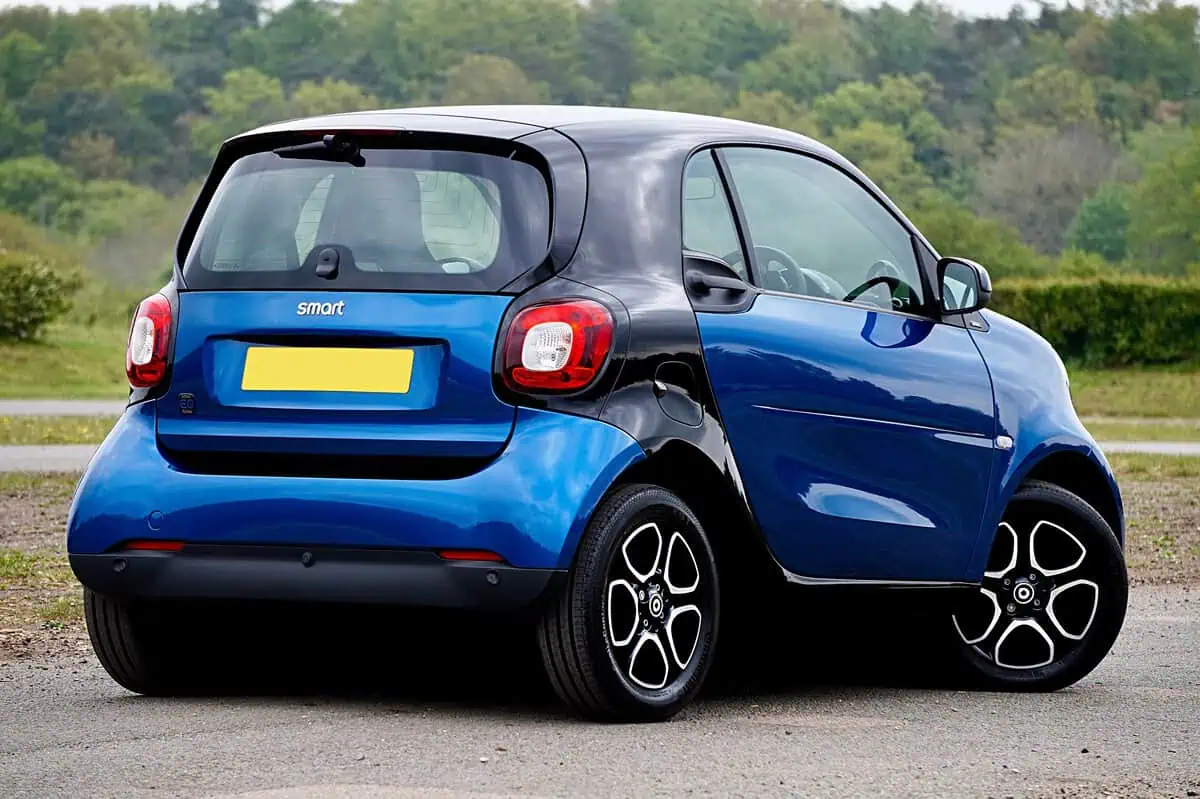
India’s relationship with the car is changing.
For decades, the conversation was largely about fuel efficiency, engine performance, resale value and maintenance costs. Now another question is entering the showroom: How smart, connected and efficient can the vehicle actually be?
Electric cars are pushing that conversation forward.
And the shift is no longer limited to early adopters or luxury buyers. India’s electric passenger-vehicle registrations reached 30,325 units in August 2026, up 50% year over year, according to Vahan data compiled by Nuvama. EVs accounted for 7.4% of passenger-vehicle registrations during the month.
That’s not a tiny niche anymore.
EV Adoption Is Moving Into the Mainstream
Think about the change for a moment.
A few years ago, buying an electric car often meant accepting limited model choices. Today, Indian buyers can choose between compact EVs, family SUVs, premium sedans and performance-oriented electric vehicles.
Recent registrations show the momentum clearly. August 2026 electric passenger-vehicle sales crossed the 30,000 mark, with Tata Motors, Mahindra and JSW MG Motor among the leading manufacturers. VinFast also moved into fourth place during the month, according to Autocar India.
More choices naturally create more competition.
And competition usually gives buyers more reasons to compare.
Smarter Cars Are Becoming Everyday Cars
The interesting part isn’t just the absence of a petrol engine.
Modern EVs are increasingly built around software, connectivity and digital interfaces. Features such as connected-car services, remote vehicle controls, over-the-air updates, advanced driver assistance and intelligent energy management are becoming part of the ownership experience.
That changes the relationship between driver and vehicle.
Your car isn’t simply something you start, drive and park anymore. It can communicate with you, monitor its own systems and receive software improvements over time.
That’s a very different ownership model.
Electric SUVs Are Changing Buyer Expectations
SUVs have become a major part of India’s car market, and electrification is following the same path.
Models such as the Tata Harrier EV, Mahindra XEV range and MG Hector Tomahawk EV show that buyers don’t necessarily have to sacrifice size or road presence to go electric. The MG Hector Tomahawk EV, for example, entered the Indian market in August 2026 at ₹19.50 lakh according to current launch listings.
Upcoming products are pushing the idea further.
The Tata Safari EV is currently listed for a December 2026 launch, while Mahindra’s Thar E is expected in November.
For families, that matters.
An EV doesn’t have to look or feel like a compromise.
Premium Models Are Raising the Technology Bar
At the other end of the market, luxury electric cars are bringing a completely different set of expectations.
The BMW i5 LWB arrived in India in September with an 81.6kWh battery, rear-wheel drive and a claimed 669km MIDC range. The BMW i7 facelift also arrived on September 11, adding another high-end electric option to the Indian market.
Then there’s the Porsche Cayenne Electric, which brings performance-focused electrification into the premium SUV space. The model uses a 113kWh battery and dual electric motors, with the top Cayenne Turbo Electric producing up to 844hp and 1,500Nm.
The message is pretty clear.
Electric doesn’t automatically mean slow, basic or purely practical.
The Cost Conversation Is Changing
Let’s be real: purchase price still matters enormously.
But EV buyers increasingly look beyond the showroom figure.
Running costs, charging expenses, maintenance requirements and daily usage all influence the ownership calculation. Rising fuel prices are also encouraging consumers to examine alternatives more closely. Recent Indian market data shows alternative-fuel vehicles—including EVs, hybrids and CNG models—collectively accounted for 41.95% of passenger-vehicle sales in August, surpassing petrol/ethanol vehicles at 40.85%. EVs alone represented 7.63%.
That’s a meaningful shift in consumer behavior.
People are comparing the whole ownership experience, not just the badge on the bonnet.
Charging Infrastructure Remains the Big Test
Of course, there is still work to do.
A growing EV population needs a dependable charging network. Without convenient charging at homes, workplaces, highways and public locations, even an excellent electric car can become inconvenient.
Recent reporting on India’s charging expansion highlights the scale of the challenge, with thousands of additional charging points planned while the country works toward much larger EV adoption targets.
This is where smarter mobility becomes bigger than the car itself.
Charging networks, renewable energy, battery technology, digital payment systems, navigation and connected infrastructure all have to work together.
India’s EV Market Is Becoming More Diverse
One of the most encouraging changes is variety.
Current Indian launch trackers list around 18 upcoming electric cars for 2026–27, spanning SUVs, sedans and smaller vehicles. Expected models include Volvo EX90, Volvo ES90, VinFast VF3, Hyundai Inster, Hyundai IONIQ 6, Mahindra Thar E and Tata Safari EV.
That gives buyers something the early EV market couldn’t offer: choice.
Different budgets. Different body styles. Different priorities.
That’s when a new technology starts feeling less like a niche and more like a normal part of everyday life.
The Road Ahead Looks More Connected
Electric cars are changing more than what’s under the hood.
They’re influencing how people think about transportation, energy use, software, ownership costs and even the role a vehicle plays in daily life.
India’s EV market is still developing, and there will be bumps along the way. Charging availability, battery costs, resale values and long-term reliability will continue to shape consumer confidence.
But the direction is becoming easier to see.
Cars are getting cleaner, more connected and increasingly software-driven.
And Indian buyers are getting more choices along the way.
